
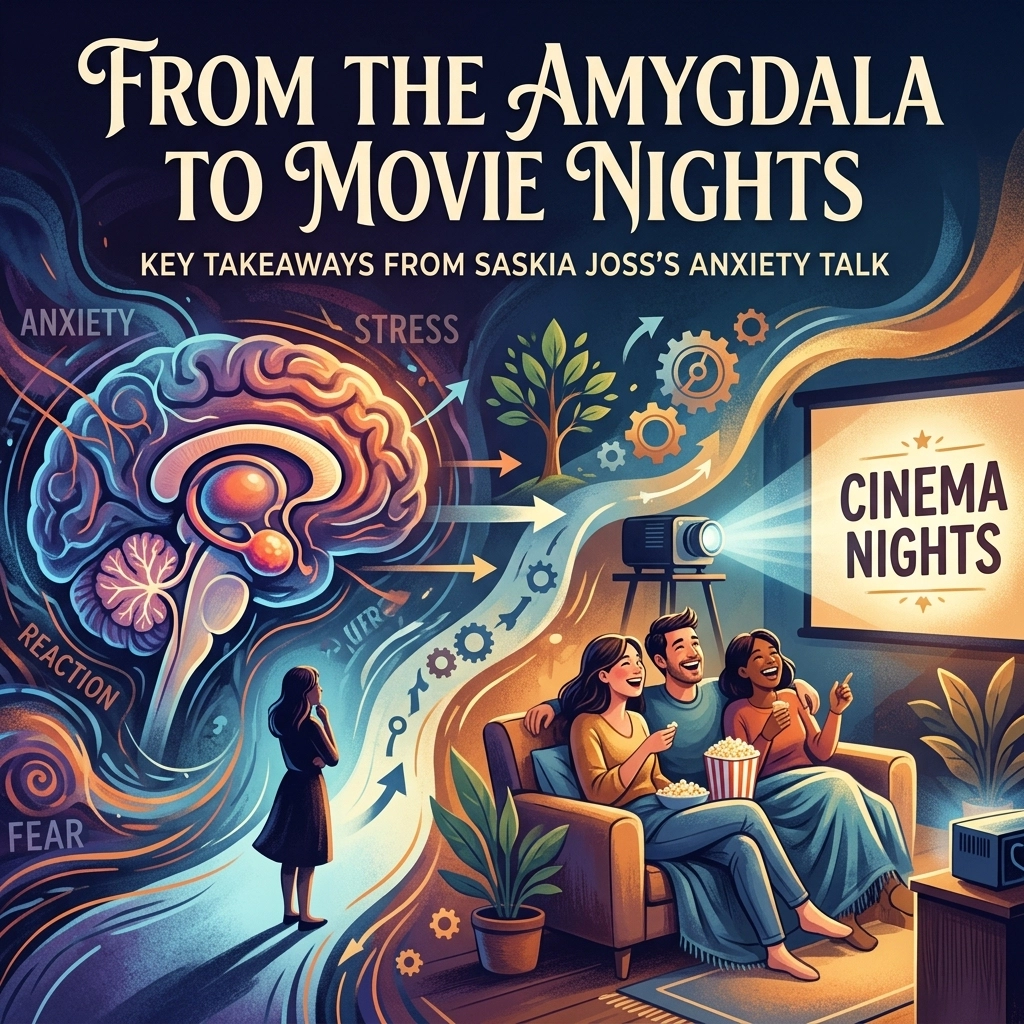
At the Mill Hill Therapy Hub, we’ve always believed that a therapy practice is more than just a collection of beautiful rooms: it’s a living, breathing community. Whether you are one of our dedicated practitioners or a parent in the local area, we want to make sure you feel supported, informed, and connected. That’s why we were so thrilled to host an exclusive online talk in late March 2026 with the brilliant Saskia Joss.
Saskia is a familiar face around the Hub and a true expert in child and adolescent mental health. For our opt-in members, her session was a deep dive into the mechanics of anxiety and, more importantly, how we can help the young people in our lives navigate it. We know that for many therapists looking for therapy rooms to rent london, the environment is key: but so is the ongoing learning and CPD we provide.
If you missed the live talk, don’t worry! We’ve pulled together the most impactful takeaways to help you and your family find a bit more calm in the chaos.
Anxiety: The Opposite of Safety
One of the most striking things Saskia mentioned right at the start of her talk was a simple but profound definition: Anxiety is the opposite of safety.
Often, we treat anxiety as a “problem” to be fixed or an “emotion” to be suppressed. But Saskia reframed it as a biological signal. When a child (or an adult!) feels anxious, their system is essentially telling them that they are not safe. This might not mean there is a physical predator in the room, but the brain is reacting as if there were.
Creating a sense of safety isn’t just about saying “you’re fine.” It’s about creating an environment: much like the warm, inclusive feel we strive for in our therapy rooms london: where the nervous system can finally let down its guard.

The Biology of the Brain: Alarms and Cuddles
Saskia broke down the science of what’s happening under the hood in a way that was incredibly easy to digest. She focused on four key biological players that dictate how our kids feel:
1. The Amygdala (The Alarm)
Think of the amygdala as the brain’s smoke alarm. Its job is to sniff out danger. In an anxious child, this alarm is often hyper-sensitive. It goes off at the slightest hint of “smoke”: a change in routine, a loud noise, or a stressful news report. When the alarm is ringing, the “thinking brain” goes offline. This is why you can’t reason with a child in the middle of a panic attack; they literally can’t hear you over the noise of their own internal siren.
2. Oxytocin (The Cuddle Chemical)
This is the good stuff! Oxytocin is released when we feel connected, loved, and physically close to someone we trust. Saskia explained that oxytocin is the natural antidote to the stress hormones triggered by the amygdala. It’s why a hug or a quiet moment together can feel so transformative.
3. Dopamine and Serotonin (The Feel-Good Factors)
These are our “reward” and “stability” chemicals. Dopamine gives us that little hit of joy when we achieve something, while serotonin helps regulate our mood and sleep. When these are in short supply, anxiety finds it much easier to move in and take up residence.

Practical Tips for the Whole Family
It wasn’t all just science, though. Saskia is a big fan of practical, “in-the-trenches” parenting advice. Here are three strategies she recommended for families dealing with high-anxiety days:
Use Timetables for Predictability
If anxiety is the opposite of safety, then predictability is the foundation of safety. For many children, not knowing what comes next is a major trigger. Saskia suggests using visual timetables at home. It doesn’t have to be a rigid, military-style schedule, but knowing that “first we have lunch, then we go to the park, then we have a bath” helps lower the amygdala’s guard. It gives the brain a map of the day, which feels inherently safer.
Talk About the News Sensibly
We live in a 24/7 news cycle, and even if we think the kids aren’t listening, they are absorbing the tone and the tension. Saskia’s advice? Limit exposure. It’s okay to be informed, but having rolling news on in the background can keep a child’s nervous system on high alert. When they do ask questions, answer them honestly but age-appropriately, focusing on the “helpers” and the steps being taken to keep people safe.
The Magic of Movie Nights
This was a crowd favourite! Saskia highlighted the perks of a regular, non-negotiable movie night. Why? Because it hits all the biological high notes we talked about earlier.
- Connection: Sitting together on the sofa releases oxytocin.
- Predictability: It’s a tradition they can look forward to.
- Distraction: It allows the brain to take a break from its own worries and focus on a story.
It’s a simple, low-cost way to reinforce that sense of “we are safe together.”
“Help! My Child’s Anxiety is Giving Me Anxiety”
If you found these points helpful, you really need to check out Saskia’s book, “Help! My Child’s Anxiety is Giving Me Anxiety”. It’s a fantastic resource that acknowledges a truth many of us feel but rarely say: parenting an anxious child is incredibly draining and can trigger our own anxieties, too.
Saskia’s approach is relentlessly positive and warm, much like the practitioners we host here at the Hub. Our community is full of experts who understand the nuances of the developing mind.

Supporting Our Community Through CPD
Events like Saskia’s talk are a huge part of why we do what we do. We don’t just want to provide the best therapy room rental in North London; we want to provide a space where therapists can grow. By hosting these CPD (Continuing Professional Development) sessions, we help our practitioners stay at the cutting edge of their field, which in turn provides better outcomes for their clients.
If you’re a practitioner looking for a new home, or perhaps you’re interested in joining our next talk, we’d love to have you. Our rooms: from the playful, toy-filled spaces at Sunbury Avenue to the calm, adult-focused rooms at Hale Drive: are designed to instil that very sense of safety Saskia spoke about.
Are you looking for a practitioner to help your family? You can browse our therapists sitemap to find the right fit for your needs.
Final Thoughts
Anxiety can feel like a mountain, but when we break it down into biology and small, actionable steps, it starts to feel a lot more manageable. Huge thanks to Saskia Joss for sharing her wisdom with our opt-in members.
Remember, creating a safe space: whether it’s a movie night on your sofa or a dedicated session in one of our therapy rooms to rent london: is the first step toward healing.
Keep an eye on our socials and your inbox for the next Hub event. We’re always looking for new ways to support our wonderful community of therapists and the families they serve!
0 Comments